

5 minute read
Most of us have some intuitive sense of consciousness as a state of awakeness or awareness of internal or external mileius (APA, n.d.). Yet the ‘hard problem’ of consciousness as proposed by Australian cognitive scientist, David Chalmers, remains intractable. That question is: What makes a physical state conscious rather than unconscious, and ‘what is it like’ for a person to have a conscious experience? (Chalmers, 1996).
While this might come off as academic posturing, emerging clinical research could change treatment for patients with locked-in syndrome and other minimally conscious states.
At the 30th Annual Science of Consciousness conference at the University of Arizona, Tucson, neuroscientists Giulio Tononi, Melanie Boly, Matteo Grasso, and Christof Koch presented the most recent version of Integrated Information Theory, that proposes a method for measuring and quantifying levels of consciousness according to electroencephalogram (EEG) recordings in vivo. A perturbation complexity index (PCI) measures the extent to which a stimulus integrates across various regions of the brain into a unity recognized as conscious awareness (Massimini & Tononi, 2018).
Tononi and colleagues conducted studies on volunteers in various states of consciousness, using an external magnetic coil (TMS) to ‘knock’ on the brain and create a stimulus.
The manner in which the stimulus travels across the brain and integrates, as reflected in EEG recordings, correlates with specific states of consciousness and subconsciousness (stages of sleep, anesthesia, vegetative states, etc.). A PCI of 0.31 is the threshold that discriminates between current or delayed subjective report of consciousness and unconsciousness, defined as lack of any subjective report (Massimini & Tononi, 2018).
Clinical implications of these findings are significant, for patients with brain damage from strokes, individuals with locked-in syndrome and other minimally conscious states. Locked-in syndrome is characterized by whole-body sensory loss due to tetraplegia, bulbar palsy and other conditions causing damage to the brainstem (Das, Anosike, & Asuncion, 2023).
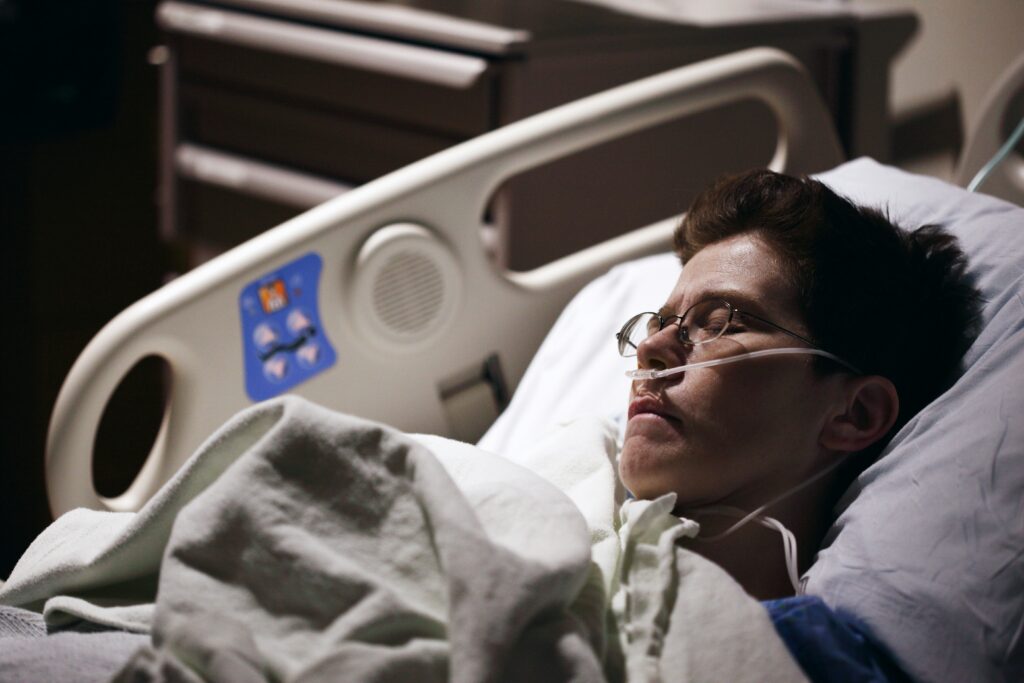
Many patients maintain cognition and some eye movement, and with rapid diagnosis and rehabilitation, have potential for improved quality of life. A 2015 study of patients with locked in syndrome revealed that the majority of individuals are satisfied with their quality of life, despite their severe disability (Rousseau et al., 2015).
Currently, decisions regarding supportive treatment for patients with locked in syndrome and other minimally conscious states are made according to temporal factors. If a person remains unresponsive for 6 months following a non-traumatic brain injury or 12 months following traumatic brain injury, the medical team may recommend withdrawing life support (NHS, n.d.).
However, research indicates that up to 20% of these patients are covertly conscious (Koch, 2024), raising ethical questions about withdrawal of supporting measures. Using the methods employed in IIT has the potential to more accurately identify patients who might be candidates for more aggressive rehabilitation, not only to maintain life, but make meaningful improvements in its quality.
References
APA.org (n.d.). Consciousness. APA Dictionary of Psychology. https://dictionary.apa.org/consciousness
Chalmers, D. (1996). Facing up to the problem of consciousness. In S. Hameroff, A.W. Kaszniak & A.C. Scott (Eds.). Towards a Science of Consciousness: The First Tucson Discussions and Debates (pp. 5-28), MIT Press. http://www.mitpress.mit.edu
Das, J., Anosike, K. & Asuncion, R.M. (2023). Locked-in syndrome. National Library of Medicine Stat Pearls. https://www.ncbi.nlm.nih.gov/books/NBK559026/#:~:text=Locked%2Din%20syndrome%20(LIS),patients%20suffering%20from%20the%20condition.
Koch, C. (2023, April 22-27). Integrated Information Theory of Consciousness [Conference session]. 2024 The Science of Consciousness Conference, Tucson, AZ. http://www.consciousness.arizona.edu
Massimini, M. & Tononi, G. (2018). Sizing Up Consciousness: Towards an Objective Measure of the Capacity for Experience. Oxford University Press. http://www.oup.com
NHS (n.d.). Disorders of Consciousness. https://www.nhs.uk/conditions/disorders-of-consciousness/#:~:text=A%20vegetative%20state%20is%20when,hand%20when%20it’s%20squeezed%20hard)
Rousseau, M-C, Baumstarck, K, Allesandri, M., Blandin, V., deVillemeur, T.B., & Auquier, P. (2015). Quality of life in patients with locked-in syndrome: evolution over a 6-year period. BMC Open. https://ojrd.biomedcentral.com/articles/10.1186/s13023-015-0304-z

Leave a Reply