
As the year ends, we often find ourselves reflecting on our journeys—both personal and professional. We ask ourselves who we aspire to become and who we are evolving into. What forces have lifted us, and which have thrown us off course? As we shed the old year’s skin, we must discern what to leave behind and what to carry forward into the new year.
Tracing our Professional Lineage
Years ago, I attended a gathering where the late family therapist Lynn Hoffman illustrated a colleague’s professional lineage by mapping out the influential figures in their career in a family tree format, like a genogram. Her friend and colleague Marcelo Pakman, a regular to these reunions, coined this exploration a “retroscope.”
On a rainy November afternoon, this reflection resonated with me as I listened to Stories of Primary Care, Sandy Blount’s interview series Pioneers of Integration, curated for the CFHA’s 30th anniversary. This series highlighted the rich tapestry of our community’s professional lineage—our “collective “retroscope.”
Cultivating Hidden Influences
During their 1970 seven-and-a-half-hour long conversation on race and identity, writer James Baldwin and anthropologist Margaret Mead reflected on how ancestry isn’t only a function of genealogy. While we cannot choose our genetic ancestors, we can cultivate our intellectual lineage, consciously selecting the ideas and paradigms from which we wish to work.
However, this legacy is not always built consciously or deliberately. Our professional influences might become subtly entangled in our professional identity through other influential figures acting as intermediaries or connectors. I experienced this listening to Sandy’s series and appreciate the series’ role in unveiling and preserving our integrated care legacy.
Becoming Seed Guardians
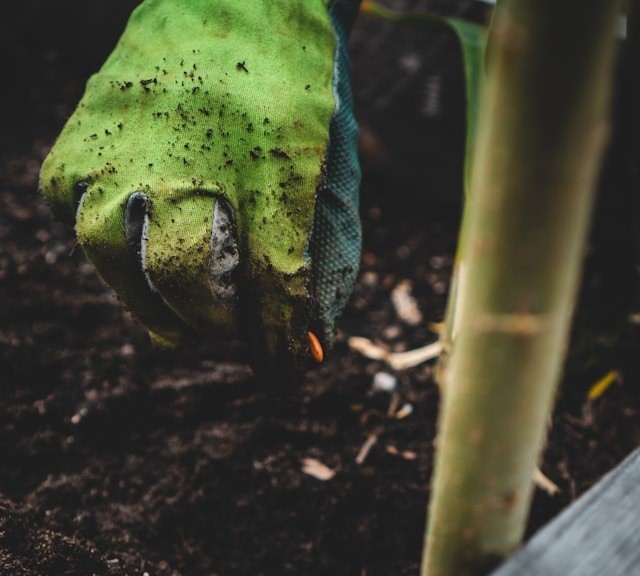
Indigenous peoples worldwide collect, preserve, and revive seeds to protect the traditional crops their ancestors grew. Protecting their ancestral heritage contributes to the world’s food diversity and can help us adapt to climate change. Chilean Indigenous Mapuche Delfin Toro says: “It’s like being seed guardians. We are rescuing seeds and knowledge from our ancestors, how they harvested, how they sowed, the dynamics of the moon, when to plant, and when to harvest. “
In the spirit of Indigenous communities that preserve their seeds for future generations and ignited by the trailblazers who entrusted us with their legacy, I collected ten thoughts from the pioneer interviews to carry into the new year, a year that holds the potential to shape our professional lives in unprecedent ways.
Preserving Future Crops
- Shared Mental Models: Build shared models that function as bridges between disciplines and foster better collaboration. (Susan Mc Daniels)
- Dialogue Across Disciplines: Shared dialogue has the power to enhance care and also provide us with a sense of strength and purpose that sustains us. (Larry Mauksch)
- Competency is a Team Sport: Focusing on better understanding team dynamics is just as crucial as understanding family and group dynamics. (Bill Doherty)
- United by Clinical Excellence: Clinicians, regardless of their disciplines, are united by their dedication to patient care—much like musicians are united by their musicianship, not their instruments. (CJ Peek)
- No Wrong Patient: Thinking that every patient deserves our care reshapes our approach to treatment. (Kirk Strosahl)
- Context Matters: Failing to understand our patients can be costly financially and impact the quality of care. (Mac Baird)
- Self-reflective Systems: If an approach is not working, it might be time to reassess the system and us within it. (Sandy Blount)
- The Critical Role of Training: Let’s not forget that we cannot expect someone to succeed without proper training and guidance. (Patti Robinson)
- The Importance of Joy: Never overlook the joy in new endeavors—ours is not just an intellectual pursuit but a social and emotional one. (Michael Glenn)
- Data-Driven Futures: It is essential to follow meaningful data, not to amass endless numbers but to acquire enough to understand the heartbeat of our work. (Patti Robinson)
As we embrace the coming year, let us be mindful architects of our lineage, choosing the influences and inspirations that will define not just who we are but who we will become.
Good Year to Us!
-
From Coding to Braiding: AHRQ Integration Academy Webinar Highlights New Toolkit for Financing and Sustaining Integrated Behavioral Health

The AHRQ Academy for Integrating Behavioral Health and Primary Care’s recent webinar, From Coding to Braiding: Strategies for Financing and Sustaining Integrated Behavioral Health in Primary Care Settings, explored how practices can move beyond a narrow focus on billing codes and toward a broader, more sustainable financing strategy that supports whole-person care. During the session,…
-
The Apathy Is Real: Why You Don’t Even Want To Read This

I’ll keep this short, because I know you’re tired. I know because I’m watching it in real time. At CFHA – The Integrated Care Association, workgroups that used to convene monthly have scaled back, not because the work is done, but because people are tapped out. In my clinic, residents who would have once jumped…
-
Playing the Defensive End: Empathy and Action in Integrated Care

The game is played back and forth, each side jostling to score a goal where possible. The scoring can be few and far between, a lot more chances and shots at goals, than reward. Often the activity is quick, a quick run by a team toward the goal, and then the ball is going backward the other way, exchanging possession back and forth… Yet…

Chus,
Thank you for commenting on the Pioneers interview series. I also think it is meaningful today, and your picking of some of the points that most struck you is a lovely way to help people engage with it. And I love the metaphor of “keeping the seeds.” I love having the interviews associated with things like heritage fruits and vegetables, that are more varied in appearance, don’t have as thick skins or as long shelf life as current ones, but taste better and are better for you. Thank you again.
Thank you for your comment, Sandy. I truly enjoyed the series and can’t wait for your next project to come to life. As always, thanks for your inspiration and leadership.