
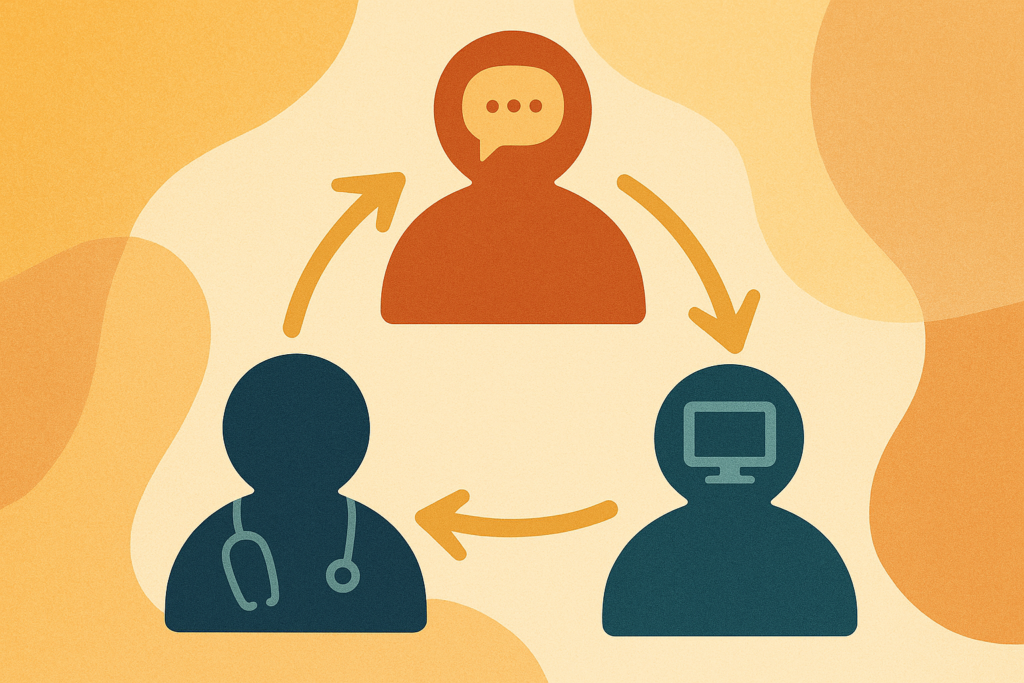
As healthcare continues to move toward truly patient‑centered care, collaborative documentation has emerged as a transformative practice. By co‑creating clinical notes with patients in real time, clinicians build transparency, improve accuracy, and deepen engagement. This approach not only enhances communication and understanding—it also advances equity by involving all patients directly in the clinical narrative, regardless of their digital access to notes outside the visit.
Collaborative documentation is far more than a technique for writing notes. When used intentionally, it becomes a foundation for partnership‑based care and serves multiple meaningful functions that shape the clinical encounter itself.
The Functions of Collaborative Documentation
A Process and an Outcome
Collaborative documentation turns the note into both a shared activity and a tangible product of the visit. The act of co‑writing reinforces engagement, while the resulting note reflects a truly mutual account.
A Clinical Tool
Writing with the patient—rather than about them—strengthens trust, confidence, and motivation. It helps patients feel seen, heard, and actively involved in their care.
A Negotiation
By inviting real‑time feedback, the clinician and patient shape each other’s perspectives, clarify expectations, and align on goals and next steps. This process reduces miscommunication and empowers patients to voice concerns early.
A Bridge
Collaborative documentation closes the gap between clinical and everyday language. It creates opportunities for teaching, shared understanding, and demystifying complex medical or behavioral health concepts.
A Risk Reduction Strategy
When patients hear and see the documentation as it is created, misunderstandings are less likely to occur. This transparency supports safer care and ensures clarity about decisions, instructions, and follow‑up plans.
A Self‑Care Tool
By completing documentation during the visit, clinicians reduce after‑hours work. This practice helps prevent burnout and promotes sustainable, relationship‑centered care.
Enhancing Collaborative Documentation with AI
Artificial intelligence adds a new dimension to the collaborative documentation process by forming a triad partnership among clinician, patient, and technology. Used thoughtfully, AI can enhance accuracy, efficiency, and accessibility—without replacing the human relationships at the heart of care.
AI can:
- Streamline documentation so clinicians can maintain presence and focus on the patient.
- Adapt explanations and summaries to a patient’s literacy level.
- Highlight key themes, patterns, and priorities based on historical information.
- Support clinician self‑care by reducing time spent on administrative tasks.
Yet an important question remains: Can AI also support the relational aspects of collaborative documentation?
If AI can help map the trajectory of patient‑provider interactions, offer insights into communication patterns, and surface moments of misunderstanding or emotional shifts, it could strengthen—not dilute—the partnership. This would allow AI not only to document care more accurately, but also to deepen the clinician’s understanding of the patient’s evolving needs, preferences, and motivations.
The potential is promising, but requires thoughtful implementation to ensure AI enhances, rather than interrupts, the human connection.
Looking Ahead
Collaborative documentation offers a practical and relational pathway toward more equitable, engaging, and sustainable care. When combined with responsible and patient‑centered AI tools, it has the power to elevate the clinical encounter, reduce burden, and foster deeper understanding between clinicians and patients.
As this work continues to evolve, the central question is not simply how AI can document more efficiently, but how it can support the partnership at the heart of patient care. When aligned with the values of transparency, shared understanding, and equity, AI can become a powerful ally in reimagining what documentation—and clinical relationships—can be.

Leave a Reply