
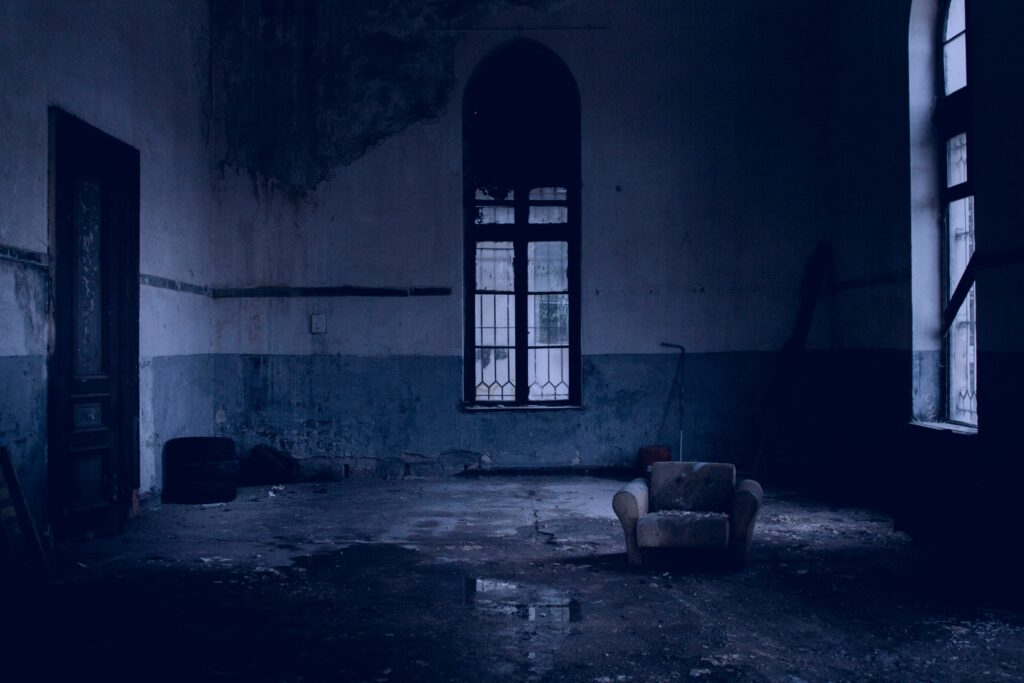
Here’s our prevailing narrative for raping and pillaging in healthcare: Private equity firm buys a floundering hospital to ostensibly save it. Private equity firm then extracts all resources from that hospital to enrich itself. Healthcare staffs are slashed and patient care quality plummets. Private equity firm then sells the hospital at a fire sale price.
Our national example has been Prospect Medical Holdings, a for-profit, 17-hospital chain serving mostly low-income patients in California, Pennsylvania, Connecticut, Rhode Island, and New Jersey. As early as 2020, ProPublica, the independent investigative journalism outfit, published a lengthy expose about how Leonard Green and Partners, a Los Angeles-based private equity firm which bought a controlling interest in Prospect in 2012, extracted $400 million from the chain. A 2022 case study by the Private Equity Stakeholder Project, a non-profit watchdog group, put that number at $658 million. Then came the kicker as described in a December 30, 2025 post-mortem in The New Republic entitled “The Private Equity Firms That Gobble Up Hospitals and Spit Them Out.” After Leonard Green finally it sold off in 2023, Prospect filed for bankruptcy in January 2025. All its hospitals subsequently closed. Thousands of healthcare workers were laid off.
Sounds like a tragedy with a devious villain, right? Private equity kills healthcare. The reality, in my opinion, is more complicated but no less disturbing.
From 1994 to 2018, I was a behavioral health faculty member in the family medicine residency program run by Crozer Health, a not-for-profit, four-hospital system and the dominant provider in Delaware County, Philadelphia’s western suburb of a half million socioeconomically mixed residents. Crozer served everyone from the well-to-do in the academic enclave of Swarthmore to the working class in communities such as Upper Darby (childhood home of Tina Fey and Jim Croce) to the impoverished in Chester, a small rust belt city that had become one of the poorest in the country. Despite its “bad insurance mix”—too many uninsured and Medicaid members, too few Blue Cross subscribers—scrappy Crozer was dedicated to the health of its varied communities. It had a Level III trauma center, strong primary care residency training programs, and one of the largest behavioral health systems on the East Coast. It invested in scaling innovative, evidence-based community health programs, such as Healthy Start and Nurse-Family Partnership. It helped support the county’s Federally Qualified Health Center.
One of the many reasons I loved working there was the constant variety of patients—from new immigrants from Liberia, Bangladesh, and South Korea to local school district bus drivers to the occasional Swarthmore College professor—who passed through the doors of our residency’s family health center. Another was our underdog status: Philadelphia’s larger and better endowed health systems, such as Penn Medicine and Jefferson Health, could profit by offering high-cost, high-tech surgeries to international VIPs, but we were going to make it by serving our own humble county.
Only we didn’t make it. Because Medicaid reimbursement doesn’t cover the costs of most hospital procedures, Crozer struggled financially throughout my years there. It got so bad at times that we were instructed not to buy office supplies, such as paper clips or water jugs for our staff water cooler, for weeks or months. With no end of red ink in sight, the Crozer board in 2014 decided to seek a buyer to help it remain solvent and continue its mission. No local buyers emerged, though. Out of desperation, the board decided to sell to for-profit Prospect because it had turned around some smaller LA hospitals with poor communities reliant on Medicaid. The sale was finalized in 2016.
I had high hopes for Prospect initially. It planned to apply its population health model of Regional Care Coordination in which it would take full-risk value-based contracts from the local health insurance companies and then apply complex care principles, such as intensive care management, to serve Medicaid patients cost-effectively. But the local insurers balked at first to offer Prospect such full-risk contracts. Without them, Prospect had little chance of succeeding financially at Crozer (or, as it turns out, with any of the other East Coast hospitals it purchased around the same time it bought Crozer).
The reckoning came due. Leonard Green wanted its profits and quickly. By the time I left Crozer in 2018 (to work in healthcare consulting), Prospect was beginning to disinvest from, not invest in, the health system. That extraction process only accelerated in the following years, especially through the pandemic.
So who or what killed Crozer Health and all the other hospitals that made up Prospect? Private equity didn’t help. Its offer of investment was fool’s gold, a parachute with a gaping hole. The truth is, though, that Crozer and perhaps the other hospitals were already in free fall before Leonard Green decided to capitalize on their desperation.
And why were those hospitals desperate? Because, as a society and government, America doesn’t provide enough resources to care for poor people. Our Medicaid plans give just enough to entice health systems but not adequately support them. I hate private equity and wish it were banned from investing in not-for-profit healthcare. But I rue our anemic and cruel healthcare financing system. My beloved Delaware County, bereft of four hospitals and multiple outpatient medical offices and other services, is now nearly a healthcare desert.
Barry J. Jacobs, Psy.D. is the author of coauthor of The AARP Caregiver Answer Book (2025) and three other self-help books and writes a monthly column for the AARP website.
Photo by Yener Ozturk on Unsplash

Thanks for writing this piece. You write my mind. I am proud of the work we all were doing at Crozer and value the friendship and the energy we fostered.
I have been busy and try to stay engaged in work that satisfies. At present I volunteer in a local Philadelphia public K-8 school, tutoring and running the library 4 1/2 days/wk. My other commitment is with a Quaker nonprofit working to assist immigrants in the US who are seeking options as options disappear for them in this country. Three Quakers started the nonprofit February, 25: thenorthstarnetwork.com
I would enjoy having lunch sometime with others from Crozer.
Thank you for expressing this
heartbreaking truth so eloquently, Barry. The same scenario is being played out all over the country.